Roof Repair Geelong West
Rows of Edwardian and interwar homes with original terracotta tile and early Colorbond re-roofs.
View Geelong West guide

Local knowledge, property by property
A roof near Corio Bay ages differently from one on an elevated southern street. We bring the same photographic inspection and written scope to every suburb, then adapt the diagnosis to the material, housing period, exposure and access at your property.
The Geelong roofscape
Geelong has grown outward from the bay and central city through distinct building periods. The resulting roofscape is varied: terracotta on Edwardian cottages, concrete tile on postwar brick homes, coated steel on replacements and recent builds, plus low-pitch metal additions behind older façades. The correct repair depends on more than a suburb name, but location provides useful context for what an inspection should investigate.
Corio Bay influences wind and airborne salt across the northern and western suburbs. The Barwon corridor and lower areas experience persistent cool-season moisture. Elevated streets receive greater wind exposure, while mature inner-suburb trees load gutters and valleys with organic debris. Summer UV and rapid temperature change affect the entire region. These forces work on different roof materials in different ways, which is why a generic surface patch can miss the actual mechanism of failure.
Our service is mobile and site-based. There is no shopfront you need to visit; the useful work happens at your property, where roof pitch, access, drainage, materials and internal evidence can be assessed together. Standard service-area inspections carry no travel or call-out charge. If you are just beyond the suburbs shown here, call and tell us your location—we will confirm coverage before arranging a visit.
We also travel across the wider Geelong region. Call with your suburb and the type of roof issue for a quick coverage answer.
+61 7 4428 2846Ten core local areas
These local guides explain the housing patterns, environmental exposure and recurring roof defects found around each area. They support an on-site inspection; they do not replace one.
Rows of Edwardian and interwar homes with original terracotta tile and early Colorbond re-roofs.
View Geelong West guidePostwar brick homes with concrete tile roofs reaching the end of their original coating life.
View East Geelong guideTight period streets near the rail line where access and scaffolding planning matter.
View South Geelong guideBayside streets where salt exposure and open aspects test metal roofs hardest.
View Drumcondra guideLarge period homes with complex roof geometry, slate detailing and mature tree cover.
View Newtown guideCompact postwar housing where roof maintenance has often been deferred for decades.
View Thomson guideElevated blocks with wide views and correspondingly heavy wind exposure.
View Manifold Heights guideWaterfront pocket with open, unshaded blocks and high metal-roof density.
View Rippleside guideLarge residential spread of midcentury tile roofs, many now at restoration age.
View Belmont guideMixed residential and light-industrial area served as a regional locality.
View Breakwater guide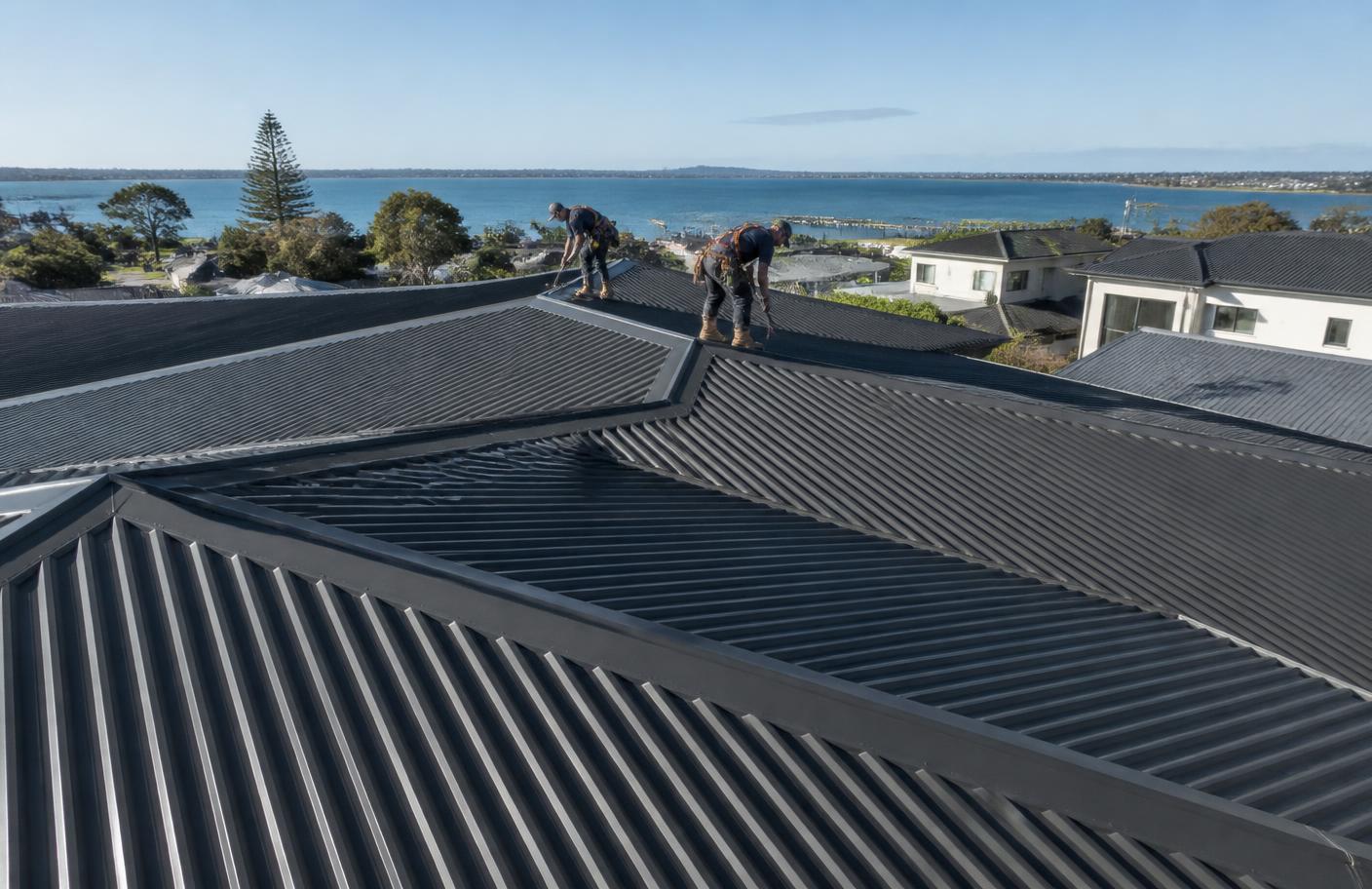
Local roof conditions
Homes facing Corio Bay receive a combination of wind, moisture and fine airborne salt. Salt loading is rarely dramatic enough to see after one weather event; it accumulates around sheet laps, screws, cut edges, valley transitions and the inside of gutters. Those are the locations where protective coatings are most easily interrupted and where water remains after the roof plane has dried. Drumcondra and Rippleside are particularly exposed, while Geelong West combines this environment with older, more complex housing stock.
On metal roofs we inspect fastener lines, neoprene washers, ridge and barge flashings, penetrations and any edge where the factory finish has been cut. A faded sheet is not automatically defective, but bubbling coating, pitting, red rust or perforation needs closer assessment. Gutters may corrode from inside where damp debris holds salt against the base, so an apparently tidy external face can hide a weakening channel. A local repair can be suitable when deterioration is contained; distributed corrosion requires a broader conversation about which components still have useful life.
Tile roofs in the same belt have different vulnerabilities. Westerly wind can drive rain under displaced tiles or through failed pointing, and old valley metal may deteriorate beneath otherwise serviceable terracotta. Geelong West cottages also contain chimneys, intersecting hips and additions that create several changes in water direction. The inspection therefore follows each drainage path and interface rather than treating salt exposure as the only explanation for a leak.

Local roof conditions
Newtown and South Geelong include period cottages, larger established homes, mature tree canopy and tightly developed blocks. Roof access is part of the technical problem here. Narrow side setbacks, high rear elevations, steep pitches and closely placed neighbouring properties influence safe access, edge protection, material handling and the practical sequence of a repair. These factors should be considered during quoting rather than appearing as surprises after work begins.
Terracotta roofs may have long-lived tiles alongside ageing ridge bedding, lead flashings and valley trays. Matching an old tile profile requires more than choosing a similar colour: the lock, lap and seating must work with the surrounding roof. Chimney flashings are frequent investigation points because masonry and roofing move differently, and old repairs often contain layers of incompatible sealant. In South Geelong, low-pitch rear additions and altered drainage can create a leak away from the main steep roof. We trace the relationship between the original house and later work before recommending a repair.
Newtown's mature vegetation increases leaf and twig loading. Organic matter blocks outlets, keeps metal wet and can divert water at valleys. Regular clearing helps, but recurring overflow may also indicate insufficient fall, too few outlets or a gutter profile that does not suit the catchment. Our inspection distinguishes a maintenance blockage from a drainage detail that needs correction. That keeps a simple clean from being represented as a permanent solution to a design problem.
Local roof conditions
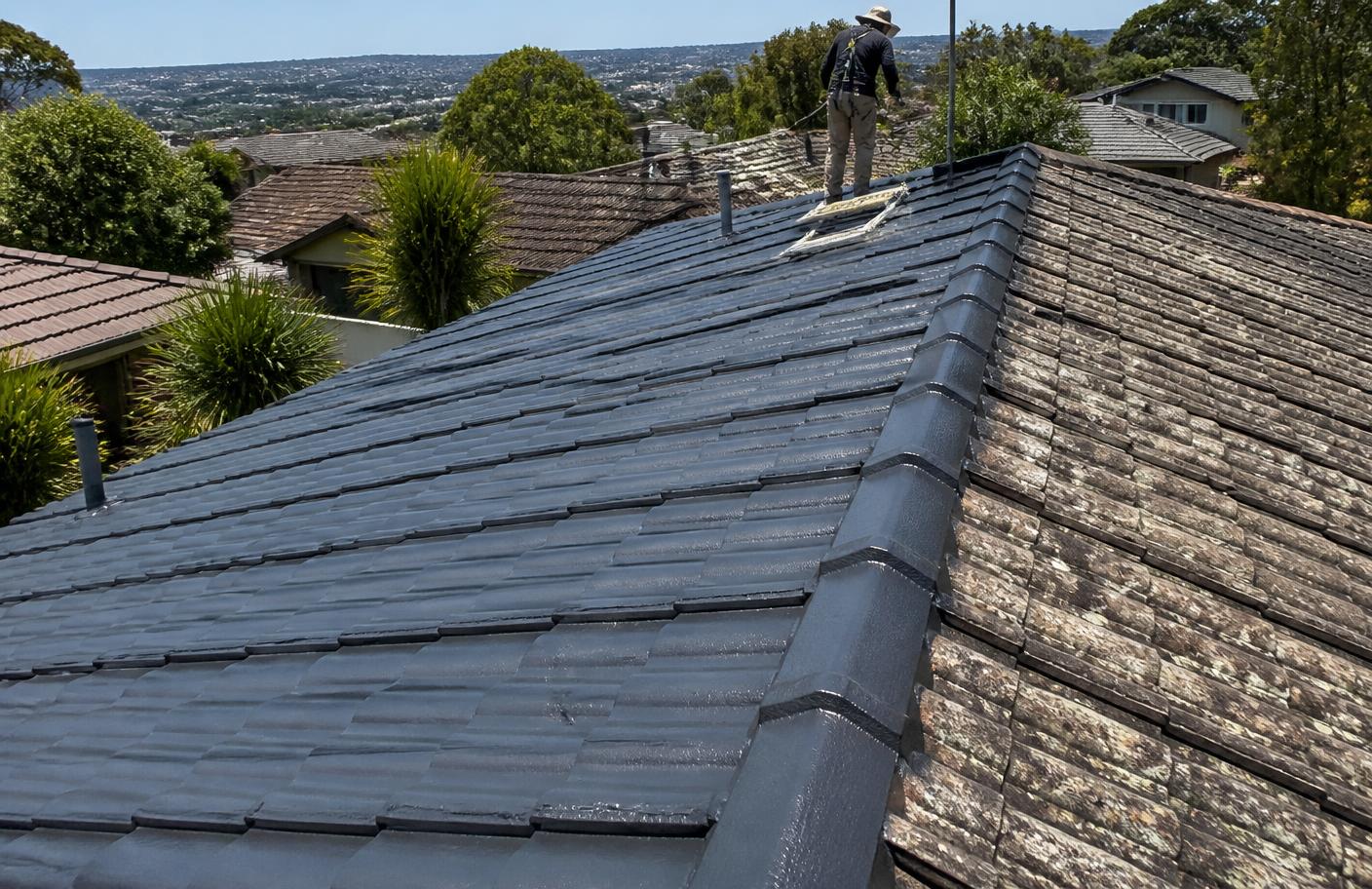
Many homes across East Geelong, Thomson and Breakwater were built or expanded during the postwar decades. Concrete tiles are common, often with a factory-applied colour layer that has weathered back to raw grey concrete. Colour loss by itself is not proof of leakage, but the exposed tile may absorb more water, stay damp longer and support moss on shaded planes. Ridge mortar, valleys and flashings often age at a different rate from the tile body, so the roof must be evaluated as a set of components rather than by appearance alone.
A sound concrete tile roof with isolated cracks may need only targeted tile replacement and local ridge work. Where pointing failure, coating loss, biological growth and small defects are distributed over several planes, restoration may become relevant. Suitability is critical: cleaning and coating are not responsible recommendations if the tile body is failing broadly or the roof has unresolved drainage and flashing defects. We inspect and repair first, then explain whether protection of the remaining surface is worthwhile.
Rear additions and enclosed outdoor areas are another common feature. They may use low-pitch metal sheets, box gutters or transitions beneath the original tiled roof. These junctions concentrate water and are vulnerable to short flashings, debris and insufficient fall. Breakwater properties can also experience moisture around lower sites and industrial exposure. The diagnosis remains evidence-led: internal staining, roof geometry, observed defects and the weather conditions that trigger the leak are considered together.
Local roof conditions
Elevation and open approaches change the wind pressure on roof edges, ridge lines and large planes. Manifold Heights and exposed parts of Belmont can experience stronger uplift around barges, eaves and corners than sheltered inner streets. Wind-driven rain also tests side laps, flashings and displaced tiles in ways that calm vertical rainfall does not. A leak that appears only during a particular wind direction is valuable diagnostic information and should be recorded when you call.
Belmont contains a broad mix of postwar concrete tile, later extensions and metal re-roofs. Changes in pitch around additions and verandas are recurring inspection points. On tiled areas we check ridge and hip stability, tile condition and valley clearance. On metal sections we check fasteners, washers, laps, penetration flashings and edge restraint. Where two systems meet, the transition must move and drain without forcing water back beneath the higher roof.
Manifold Heights includes broad roof planes exposed to summer sun. Daily thermal cycling gradually works on fixings, sealants and rigid mortar. This does not mean every weathered component needs wholesale replacement. It means the repair material and detail should accommodate expected movement. Photographic inspection allows isolated failure to be distinguished from a pattern that reaches across the roof, which is the key difference between a repair recommendation and a wider renewal discussion.
From the bay to the Barwon
The same repair standard applies across every suburb, but urgency and inspection focus vary with the symptoms. A well-planned response separates immediate safety and weatherproofing from the permanent work required after conditions settle.
Water entering a ceiling, a loose sheet edge or displaced ridge material receives priority because delay can increase internal damage. We ask about the affected room, wind direction, rainfall and any visible movement. Safe temporary weatherproofing may be the first step. A permanent scope follows once the roof can be examined properly and compatible materials are available. Urgency does not remove the need for documentation or homeowner approval.
Rust streaks, mortar fragments, a slipped tile, overflowing gutters and recurring damp smells deserve investigation before they become active water entry. These visits can usually be scheduled in normal conditions, giving the roof time to dry and allowing a more complete assessment. We identify essential repair separately from preventative options. Homeowners can then address the immediate defect and decide whether related maintenance should happen at the same time.
Restoration, painting, replacement and major gutter changes benefit from early planning. Access, scaffold needs, material lead times, rooftop equipment, drainage changes and coordination with other trades can be considered before a start date is set. We assess whether the existing roof is suitable for the proposed treatment rather than treating a new finish as the answer to every ageing roof. The written scope provides a basis for an informed, unhurried decision.
One standard across the region
Every core suburb has access to the complete service range. The right starting point is determined by evidence: a targeted repair for an isolated defect, restoration for a suitable tile roof with distributed surface and ridge deterioration, replacement when the existing system no longer supports sensible local repairs, and gutter work when collection and discharge are failing.
Roof repair in Geelong covering leak tracing, tile and sheet replacement, ridge repointing, flashing and valley repairs, with free on-site inspection.
View serviceRoof restoration in Geelong: pressure cleaning, rebedding, flexible repointing, tile replacement, primer and membrane coating with a written fixed-price quote.
View serviceRoof replacement in Geelong — full tear-off and re-roof in tile or steel sheeting, including battens, sarking, flashings and gutters, quoted in writing after inspection.
View serviceRoof painting in Geelong including surface preparation, primer, two-coat membrane and heat-reflective coatings for tile and metal roofs.
View serviceRoof repointing in Geelong — removal of failed mortar, ridge and hip rebedding and flexible pointing on tile roofs, quoted in writing after inspection.
View serviceGutter replacement in Geelong — new Colorbond guttering, downpipes, fascia repair and gutter guard, quoted in writing after a free on-site inspection.
View serviceWhat every visit includes
Local knowledge directs attention, but your roof still receives an individual assessment. We do not diagnose a home from its postcode.
A conversation about what you have observed and the weather that triggers it
Safe inspection of relevant roof planes, drainage points and interfaces
Photographs that show both the defect and enough surrounding context
A written fixed-price scope with essential work separated from options
Book locally
For an active leak, storm damage or a loose roof component, phone contact is the fastest way to explain urgency. Tell us whether water is entering now, which room is affected and whether you can see movement or debris from the ground. Never climb onto a wet or storm-damaged roof.
For planned repair, restoration, painting, repointing, replacement or gutter work, send the form with your suburb and a short description. We will arrange a suitable inspection time. The visit is used to understand access, material, roof geometry, drainage and the actual extent of work before any fixed quote is prepared.
Our aim is to give you a decision you can understand. That may be a focused repair, a staged maintenance plan or a larger renewal where the evidence supports it. You receive the scope before work begins and can ask questions without obligation.
Call Now +61 7 4428 2846⚡ Storm or hail damage? Priority response available
Call now or send the form to arrange a free on-site inspection and receive a written fixed price before we touch anything.